Claims is where the promise of insurance is kept. When a customer has a burst pipe, a car accident or a business interruption, it is the claims team who picks up the phone and puts things right. That makes it one of the most rewarding places to build a career in insurance, and one of the most varied. In this guide, we map out the claims handler career path in the UK: where most people start, how to progress, the qualifications worth working towards and the routes you can take once you have a few years’ experience behind you.
What does a claims handler do?
A claims handler manages an insurance claim from first notification through to settlement. Day to day, that usually means:
- Taking details of a loss from the policyholder, broker or a third party
- Checking the policy wording to confirm whether, and how far, the claim is covered
- Gathering evidence such as photos, reports, invoices and statements
- Instructing and managing suppliers, loss adjusters, solicitors or repairers
- Setting and reviewing reserves, and agreeing settlements within your authority
- Keeping the customer informed and treating them fairly throughout
Claims roles exist across insurers, MGAs, brokers, third-party administrators and loss adjusting firms, and across personal lines, commercial, specialty and Lloyd’s markets. The skills you build are highly transferable, which is why claims is such a strong foundation for a long career.
Where the claims handler career path usually starts
Entry-level roles
Many people start as a claims assistant, claims administrator or first notification of loss (FNOL) handler. These roles focus on taking new claims, updating systems and supporting more senior handlers. You do not usually need insurance experience to get in. Employers tend to look for strong communication skills, accuracy, organisation and a calm, empathetic manner on the phone. Experience in customer service, contact centres or administration is often a good fit.
Claims handler
With some experience, you will take ownership of your own caseload, make coverage decisions and settle claims within an agreed authority level. This is where you start to build technical knowledge of policy wordings, liability and reserving.
How to progress in claims
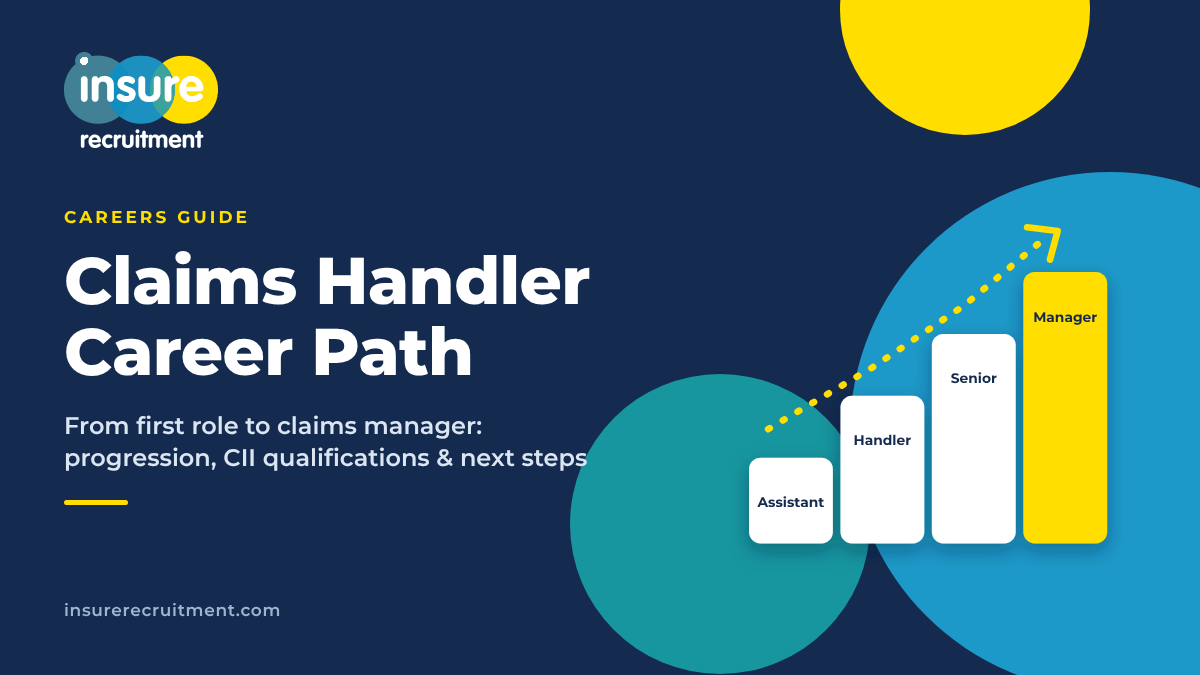
Progression in claims typically follows a mix of technical depth and responsibility. A common path looks like this:
- Claims assistant or FNOL handler: learning the systems, processes and customer side
- Claims handler: managing your own portfolio of lower-value or less complex claims
- Senior or technical claims handler: higher-value, complex or disputed claims with greater authority
- Claims team leader or claims manager: leading people, managing performance and quality
- Head of claims or claims director: setting strategy, managing claims spend and working with underwriting and senior leadership
Not everyone wants to manage people, and that is fine. Many claims professionals build excellent careers as technical specialists, handling large and complex losses in areas such as property, liability, motor, professional indemnity or cyber.
Tips to move up faster
- Ask to shadow senior handlers on complex files and learn how they make decisions
- Get to know policy wordings in detail, as coverage knowledge sets strong handlers apart
- Keep a note of your achievements, such as files closed, complaints resolved and processes improved, so you are ready for appraisals and interviews
- Show good judgement on reserving and settlement, as this is what builds trust and higher authority levels
Qualifications worth working towards
Professional qualifications are not always required to get started, but they make a real difference to progression. The Chartered Insurance Institute (CII) offers the most widely recognised route in the UK:
- Certificate in Insurance (Cert CII): a solid foundation for those early in their career
- Diploma in Insurance (Dip CII): deeper technical knowledge, often expected at senior handler level
- Advanced Diploma in Insurance (ACII): leads to Chartered status and is valued for management and specialist roles
If you are interested in loss adjusting, the Chartered Institute of Loss Adjusters (CILA) qualifications are also worth exploring. Many employers will support you with study time or funding, so it is worth asking at interview.
Specialist and sideways moves from claims
One of the great things about claims is the number of doors it opens. With a few years’ experience, you might move into:
- Underwriting: claims experience gives you a real understanding of how risks turn into losses, which underwriters value. Read our guide on how to become an insurance underwriter, or see the roles we fill through our underwriting recruitment team.
- Loss adjusting: investigating and quantifying larger or more complex losses, often out in the field
- Claims quality, audit or technical roles: reviewing files, improving processes and supporting training
- Complaints and compliance: using your knowledge of fair customer outcomes in a regulatory setting
- Broker claims advocacy: supporting clients through the claims process on the broking side
Finding your next claims role
Whether you are taking your first step into claims or ready for a senior or specialist move, the right advice makes a difference. As a specialist insurance recruitment agency with 14 years in insurance recruitment, we know the claims market well, and our claims recruitment consultants work with insurers, MGAs, brokers and loss adjusters across the country. We recruit UK-wide from our offices in Guildford and London, so whether you are looking for insurance jobs in Surrey, insurance jobs in London or further afield, we can help.
Our services for insurance candidates include CV advice, interview preparation and honest guidance on your options. We are proud to have been named Insurance Recruiter of the Year at the National Insurance Awards 2021, to be rated 5.0 on Google, and that 98% of the candidates we place are still in their role a year later.
Frequently asked questions
Do I need insurance experience to become a claims handler?
Not always. Many entry-level claims roles welcome people from customer service, contact centre or administrative backgrounds. Strong communication, organisation and empathy are often more important at the start than technical knowledge.
How long does it take to become a senior claims handler?
It varies by employer, class of business and your own development. Taking on more complex files, working towards CII qualifications and showing sound judgement will all help you progress sooner.
Can I move from claims into underwriting?
Yes. It is a well-trodden route. Your understanding of how and why claims happen is valuable to underwriters, and many employers are open to internal or external moves for strong claims professionals.
Ready to take the next step in claims?
If you are thinking about your next move on the claims handler career path, we would love to help. Browse our latest insurance vacancies or get in touch with our team for a confidential conversation about your career.